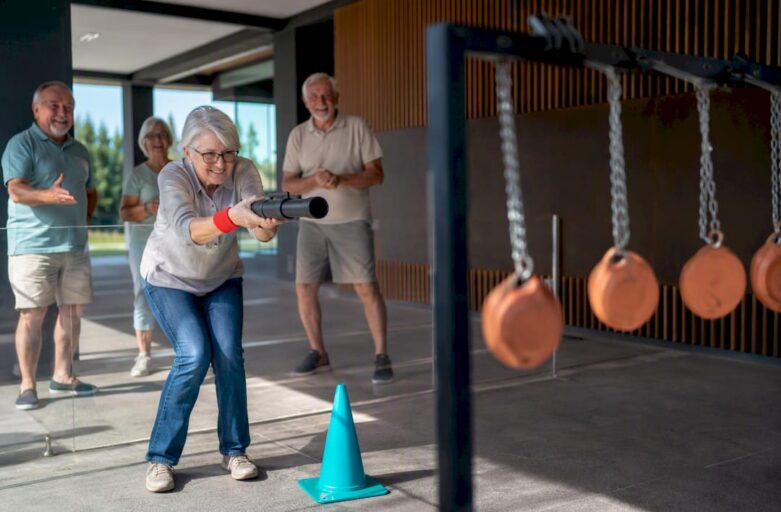
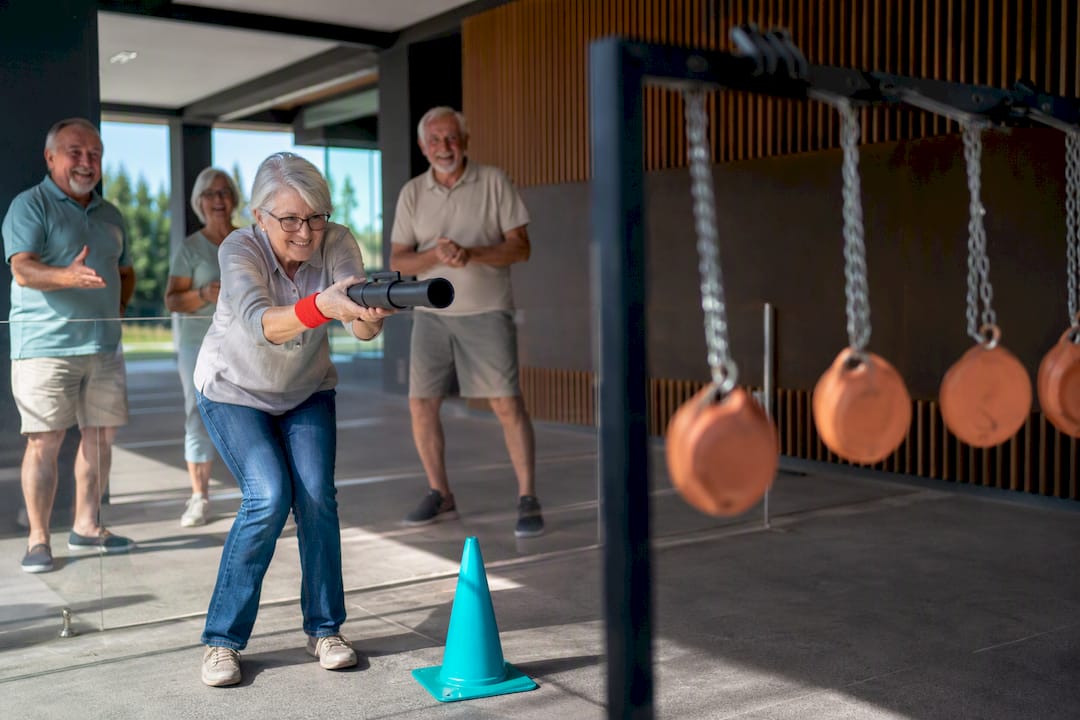
The best senior friendly team activities combine gentle physical movement with genuine social contact, not one or the other. Think chair-based games, creative group projects and cognitive challenges done in pairs or small teams. WHO guidance on community-level interventions backs this mix, and facilitated, low-risk formats like laser clay sessions fit the same brief without straining anyone’s joints.
TL;DR:
- Combining movement, social contact, and cognitive challenges yields better engagement and health benefits than single-focus activities.
- Activities should be adaptable with tiered difficulty, offer short breaks, and include a friendly, non-stigmatizing environment to maximize participation.
- Larger groups of twenty or more work well for movement relays and trivia, while smaller groups of six to ten are better suited for creative and cognitive tasks.
- Use a buddy system and build inclusivity through accessible formats, clear instructions, and a welcoming atmosphere to improve adherence and enjoyment.
- Community centers, museums, and private facilitators can provide tailored, evidence-based sessions, but planning for mobility needs and emergency procedures remains essential.
Table of Contents
- Activity categories to choose from
- Why these activities work: evidence and design principles
- How to adapt and run sessions safely
- Ready-to-run session plans you can adapt
- Where to find facilitators and materials
- What running inclusive sessions actually teaches you
- What most advice on this topic gets wrong
- A low-risk way to bring teams together
- Sources
- FAQ
Activity categories to choose from
Most senior friendly games fall into five broad categories, and the best programmes borrow from more than one. Picking the right mix depends on your group’s mobility, attention span and how well they already know each other.
Social connection games work well as icebreakers or as the whole session. Bingo, name-that-tune rounds and simple trivia quizzes need almost no physical effort and give everyone a reason to talk. A quick variant: split the room into tables of four and have them compete as teams rather than individuals, which turns a quiet activity into a livelier one.
Creative collaboration projects suit groups who enjoy making something together. Group murals, memory collages and simple craft stations let people contribute at whatever pace suits them; someone with limited hand strength can still choose colours or arrange pieces while someone else does the cutting. Henna-style decorative work, run by a facilitator experienced in creative team workshops, is a good example of a low-effort creative format that still feels like a shared achievement.
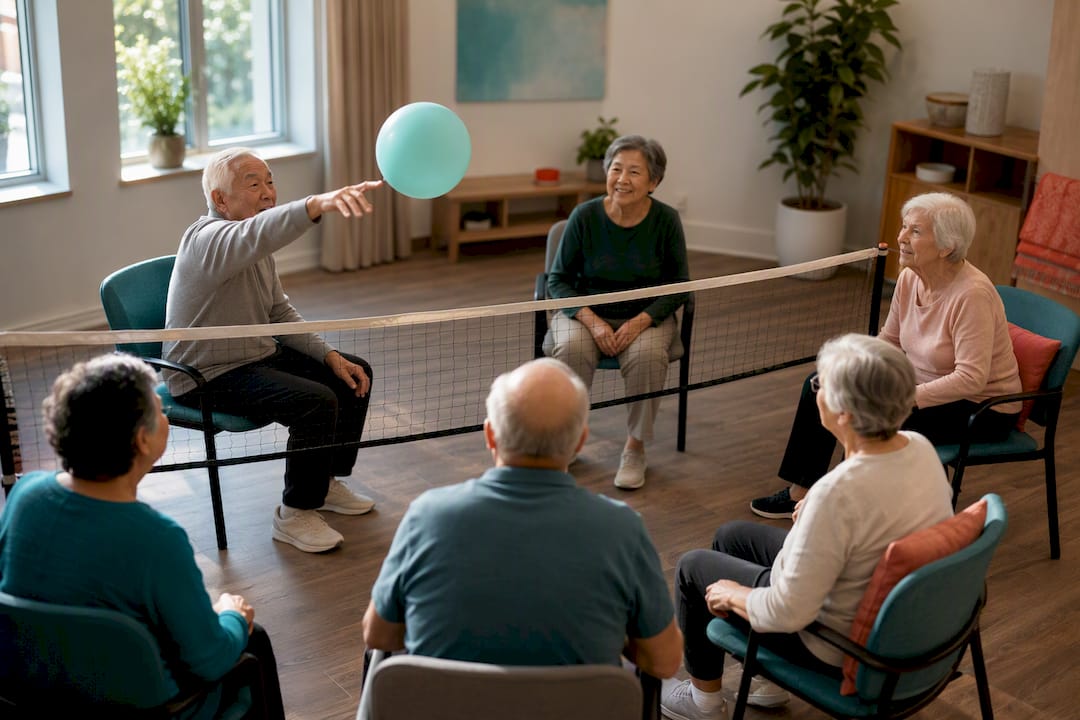
Gentle movement and sport-adapted games are the category people worry about most, and unnecessarily so. Chair yoga, seated volleyball with a balloon, and walking relays with a cane or walker as standard equipment all count. Group physical activity of this kind is linked to better social belonging and measurable gains in balance and coordination, according to sport participation guidance from ActiveSG. A simple variant for a stronger group: add a standing version of the same relay, keeping the seated version running alongside it so nobody feels pushed beyond their comfort.
Cognitive team challenges cover word games, simple puzzles solved in pairs, and reminiscence-based quizzes built around decades the group actually lived through. These work best in teams of two or three so the cognitive load is shared rather than carried by one person under pressure.
Multicomponent programmes blend two or more of the above in a single session, for example a short guided tour followed by a hands-on craft activity. These tend to outperform single-focus sessions on both engagement and outcomes, which the next section covers in more depth.
- Small groups of six to ten suit creative and cognitive categories, where conversation matters as much as the task.
- Larger groups of twenty or more work better with movement relays and team trivia, which scale naturally into multiple tables or lanes.
Why these activities work: evidence and design principles
The case for combining movement and social contact is not just intuitive, it is what the research keeps finding. WHO’s guidance on community-level interventions for older people recommends age-friendly environments, adapted physical activity and structured social support delivered together, rather than as separate programmes. A published trial review in BMC Geriatrics found that community-based programmes combining exercise with structured social participation were associated with reduced loneliness and improved life satisfaction among older adults.
A systematic review found that multicomponent interventions, those combining physical activity with social or educational elements, produce larger positive effects on both physical activity and social participation than single-focus programmes. That single finding explains why a trivia-only afternoon tends to fade in popularity while a session that mixes a short walk, a group task and a chat over tea keeps people coming back.
Three design rules follow directly from this evidence:
- Use a buddy system. Pairing participants improves engagement and adherence to group activities, according to Harvard Health’s guidance on the buddy system, and it also reduces first-session anxiety for anyone attending alone.
- Build an age-friendly environment: good lighting, seating within easy reach, and enough space between chairs for walkers and wheelchairs.
- Avoid stigmatising language. Call it a “team activity” or “session”, never a “programme for the frail” or anything that labels the group before they have even arrived.
How to adapt and run sessions safely
A senior friendly session needs a bit more planning than a standard team activity, but the checklist is short and mostly common sense.
- Check mobility and medication needs in advance. A quick form or conversation before the session tells you who needs a chair, who is on medication that affects balance or attention, and who has a hearing or vision impairment worth planning around.
- Adapt the activity, not the person. Offer a seated version of every standing task, large-print or high-contrast materials for anyone with low vision, and written prompts alongside spoken instructions for anyone with hearing loss.
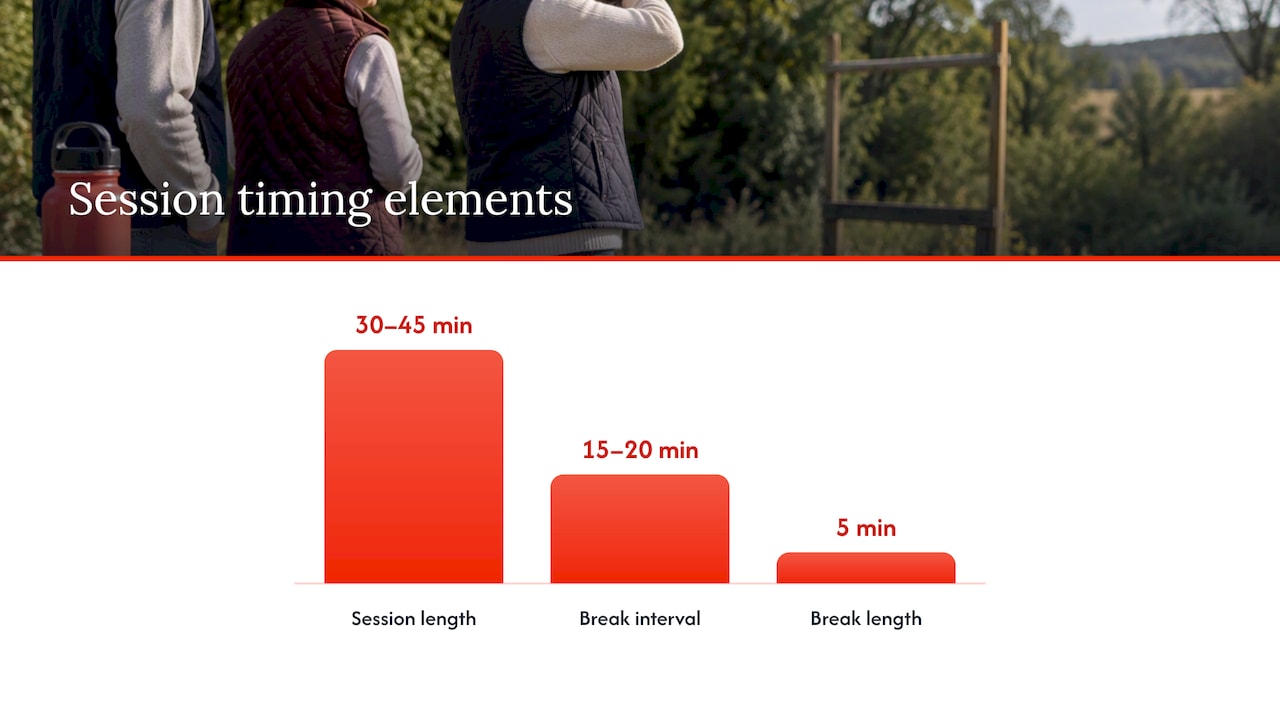
- Set a realistic session length. Thirty to 45 minutes with a social period before or after tends to work well for new groups, based on activity guidance from the National Institute on Aging; longer formats suit repeat groups already comfortable with the routine.
- Build in breaks and refreshments. A five-minute pause every 15 to 20 minutes, with water or tea available throughout, keeps energy steady without anyone feeling rushed.
- Assign volunteer roles clearly. One person greets and pairs newcomers, one runs the activity, one watches for anyone who looks tired, confused or unwell, and one manages refreshments.
- Have a simple emergency plan. Know where the nearest first aider is, keep a phone on hand, and make sure at least one facilitator knows who has relevant medical conditions in the room.
Inclusion works best when it is built into the format rather than bolted on afterwards. Offer tiered difficulty within the same game (a seated lane and a standing lane in the same relay), keep instructions short and repeat them in more than one language where the group needs it, and always pair anyone attending for the first time with someone who has been before.
Pro Tip: Print instructions in at least 14-point font and read them aloud twice, once at normal pace and once slower, before starting any timed activity.
Ready-to-run session plans you can adapt
These five templates cover the main categories above and can be run largely as written, or mixed and matched depending on your group.
- Reminiscence trivia quiz (30 to 45 minutes). Split into teams of four, ask decade-themed questions from the 1960s through the 1990s, and score a bonus point for any team that adds a genuine memory to their answer. Materials: a printed question sheet, a bell or buzzer, and a small prize for the winning table.
- Chair-based balance relay (20 minutes). Teams pass a soft ball or beanbag along a row of seated players, then the last player stands (with support if needed) to drop it into a bucket. Materials: soft balls, buckets, and a stopwatch. Works well as a warm-up before a quieter creative activity.
- Group mural or collage (45 minutes). Assign roles: cutters, arrangers, colourists and a “caption writer” who adds a title or short story to the finished piece. Materials: large paper or card, glue, scissors, magazines or fabric scraps, and washable markers.
- Kindness-first team quiz (30 minutes). Run a standard trivia format but award points for helpfulness, such as a team member helping another read a question aloud, alongside points for correct answers. This keeps the competitive element without letting it edge out cooperation.
- Short tour plus hands-on craft (60 minutes). A brief guided walk-through of an exhibit, garden or themed display, followed by a simple craft session inspired by what the group just saw. This multicomponent format mirrors the evidence-led approach behind museum outreach work, including National Gallery Singapore’s recognition as a Healing Arts Centre of Excellence.
- Keep group sizes between four and eight per table for anything involving discussion or collaborative craft.
- Reserve larger open-floor formats, like the balance relay, for groups of twelve or more where multiple lanes can run at once.
Where to find facilitators and materials
Community centres, libraries and senior activity centres are the obvious first call, and many already run structured programmes you can join rather than build from scratch. Museums with outreach arms increasingly offer facilitated, evidence-led sessions designed for older visitors, and private event facilitators can bring games, staffing and materials to a venue of your choosing.
Before booking any provider, ask a few direct questions:
- Can they adapt the activity for wheelchairs, walkers or sensory impairments?
- Do they carry public liability insurance for the session?
- What training do their facilitators have in working with older adults?
- Can they share a sample session plan before you commit?
For materials, craft suppliers often offer bulk discounts for community groups, and many local libraries or community centres run lending schemes for games, puzzles and simple sports equipment, which keeps costs down for a one-off event.
What running inclusive sessions actually teaches you
The lesson that sticks after organising a few of these sessions is how little the “big” activity matters compared with the small stuff: whether someone was greeted by name, whether a chair was in easy reach, whether the pace let a slower talker finish their sentence. Attendance climbs when the first ten minutes feel welcoming rather than clinical, and it holds steady when people leave having actually spoken to someone new, not just played a game next to them.
Success looks less like a perfect scoreboard and more like the same faces returning the following month, and a few new ones brought along by a friend. Feedback, gathered informally over the closing cup of tea, tends to be more honest and more useful than any form ever is.
What most advice on this topic gets wrong
Most guidance treats “senior friendly” as a synonym for “gentle”, and stops there. That undersells what actually works: the evidence points to combining movement, cognition and social contact, not diluting the challenge until nothing is left. A group that finishes a session having laughed, moved a little and solved something together will come back; a group that was merely kept occupied will not.
The bigger error is designing for the group’s limitations first and their interests second. Ask what a group would enjoy if age were not a factor, then adapt the format, rather than starting from a list of things they supposedly can’t do. Buddy systems, tiered difficulty and short breaks solve almost every practical concern once the activity itself is worth showing up for.
— Joshua
A low-risk way to bring teams together
Laser Clay turns competitive shooting into a facilitated, low-impact format: sound-simulated shotguns, no recoil to strain a shoulder, and reusable targets instead of lead ammunition, so it fits the safety and eco-conscious criteria this guide has covered throughout.
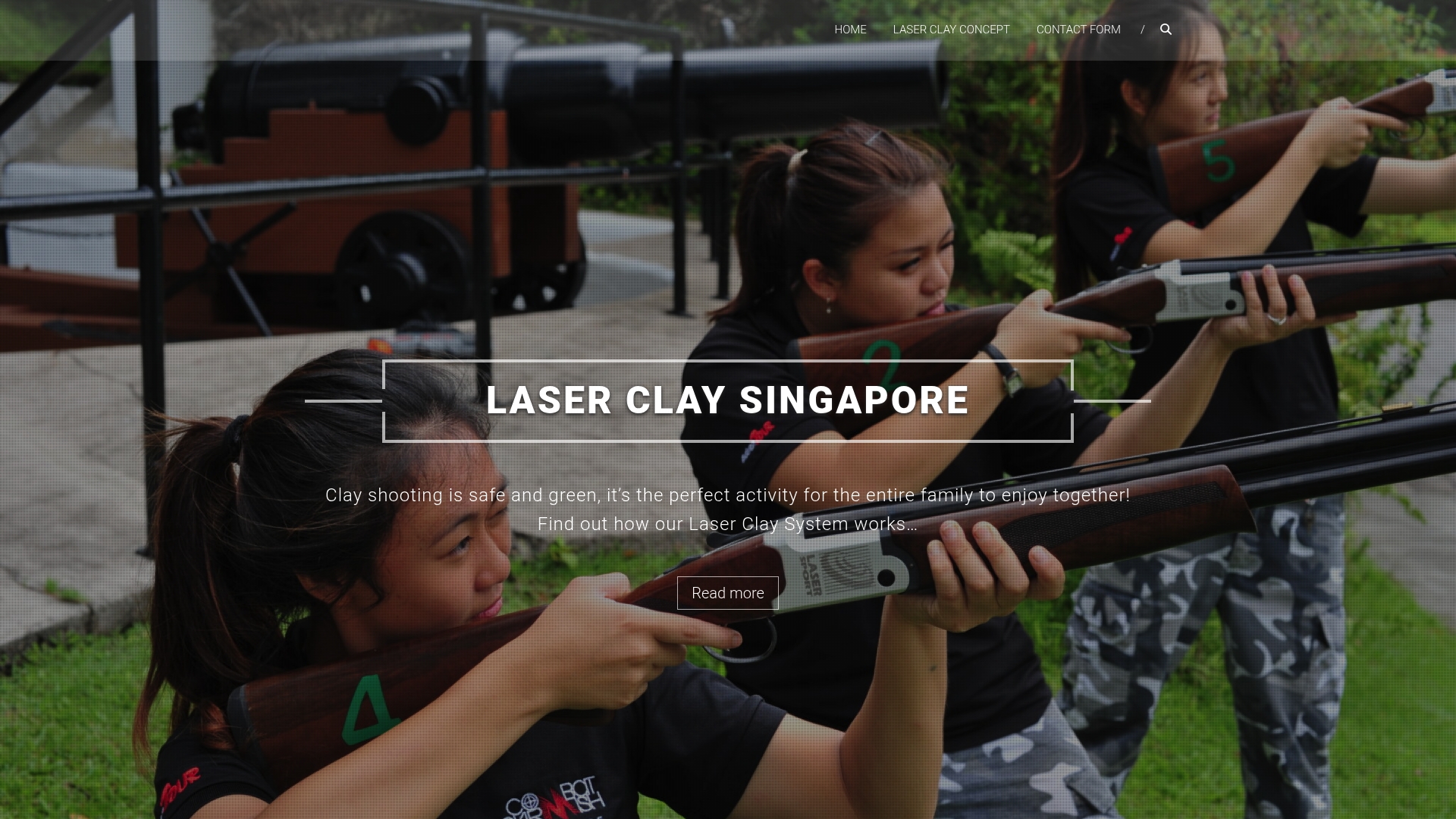
It suits corporate team days, milestone birthdays and community group outings alike, indoors or outdoors, with scoring that can reward accuracy or teamwork depending on the crowd. Confirm venue space, group size and any mobility needs when booking. Explore the Corporate Laser Clay Package to see how a session comes together.
Sources
- WHO guidelines on community-level interventions for older people
- Bridging loneliness and mobility: integrated community-based rehabilitation model for older adults | BMC Geriatrics
- The buddy system improves adherence to activity programmes | Harvard Health
FAQ
What are some fun activities for a group of seniors?
Trivia quizzes played in teams, chair-based balance relays and group craft or mural projects are consistently popular because they mix light movement with conversation. Choosing a mix from more than one category, rather than repeating the same format each time, tends to hold interest longer.
What are some fun activities for senior citizens?
Reminiscence-themed games, seated volleyball with a balloon, gentle walking relays and simple collaborative crafts all work well individually or combined. A short guided tour followed by a hands-on activity is a strong option when a venue allows it.
What are some fun and easy group games for seniors?
Bingo, name-that-tune rounds and team trivia need minimal physical effort and almost no setup, making them ideal for first-time groups or mixed-mobility gatherings. Adding a kindness-based scoring bonus, awarding points for helping a teammate, keeps the mood cooperative rather than purely competitive.
What are some fun and engaging activities for elderly people?
Multicomponent sessions that combine a short physical activity, a creative or cognitive task and a social period tend to produce better engagement than any single activity on its own. A chair-based relay followed by a group collage and a tea break covers movement, creativity and conversation in one sitting.
How long should a senior friendly team session last?
Thirty to 45 minutes suits new groups, especially with a short social period built in before or after the main activity. Regular groups already familiar with the format can comfortably manage longer sessions.