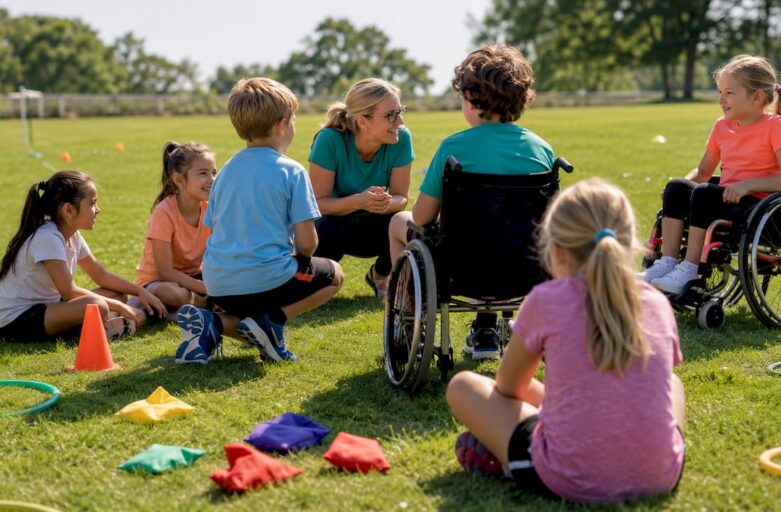
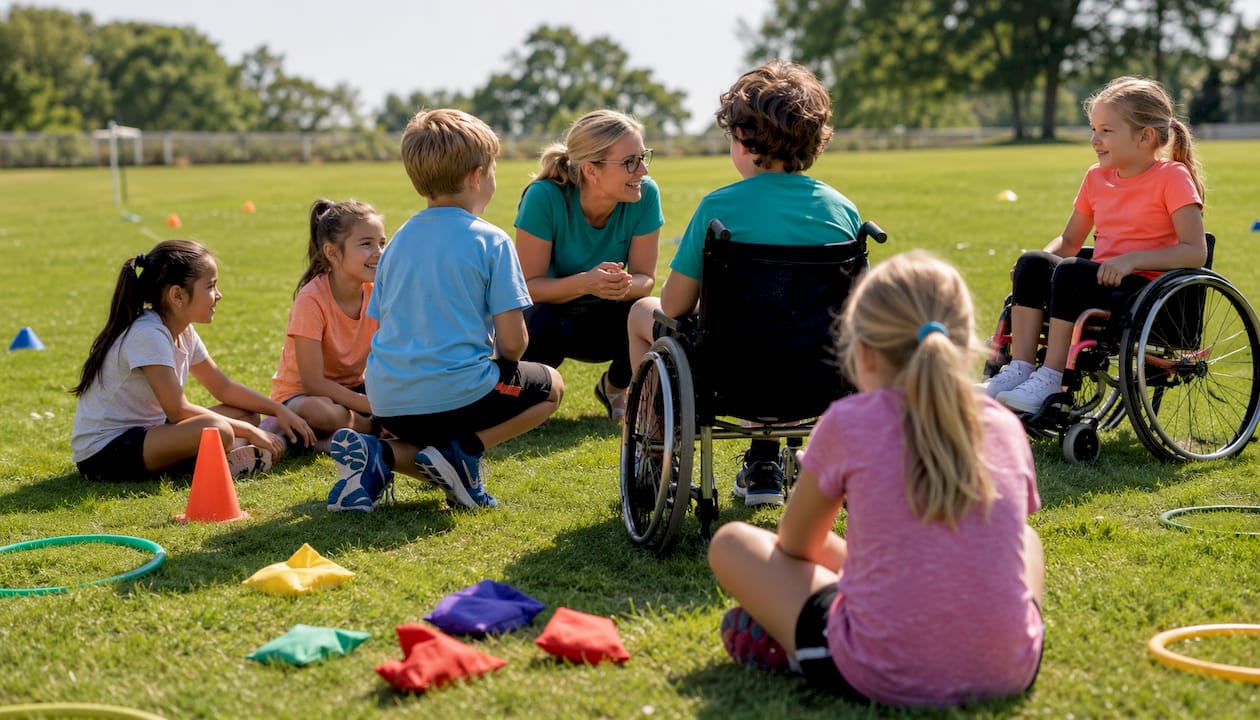
For a modern, safe, and genuinely inclusive sports day, Laserclay is the standout station to add: no live ammunition, reusable targets, and a precision-based format that levels the field for every pupil. If you need a quick shortlist before diving into the detail, here are three ready-to-run alternatives: a team treasure hunt (low equipment, cooperative), a parachute-games station (novelty, instant engagement), and a target-throw accuracy challenge using beanbags and hoops. The booking checklist and provider questions are in the budgeting section below.
Table of Contents
- What are the best school sports day alternative activity ideas?
- Why Laserclay works so well on a school sports day
- How does a Laserclay station actually run?
- Health, safety and safeguarding checklist for UK schools
- How to adapt Laserclay and other stations for mixed-ability pupils
- What does a Laserclay booking actually cost?
- Sample sports-day rotation you can copy today
- Key takeaways
- Why precision activities change the sports-day conversation
- Laserclay for your next school sports day
- Useful UK sources and further reading
What are the best school sports day alternative activity ideas?
These activities work for mixed-ability groups, need minimal kit, and can slot straight into a rotation. Cooperative tasks like team puzzle dashes and balance challenges promote collaboration far more effectively than races, and they are easier to run safely.
- Simplified ultimate frisbee — mark two end zones with cones; no tackling, self-refereed. Adapt by allowing a bounce pass for younger pupils.
- Obstacle course relay — crawl nets, hoops, and balance beams strip away the pure speed advantage. Widen the course for wheelchair users or those with mobility needs.
- Standing broad jump — tape on grass, no run-up. Measure each jump; pupils compete against their own previous distance.
- Capture the flag — split the field into two halves. Pair mixed-ability pupils so faster runners support less confident ones.
- Team treasure hunt — laminated clues or tokens hidden across the site. Particularly good for pupils who find physical events less accessible.
- Parachute games — mushroom lifts, colour swaps, keep-the-ball-bouncing. Instant engagement for younger groups; no athletic skill required.
- Target-throw accuracy (beanbags and hoops) — mark scoring zones at increasing distances. Rewards precision over power, which levels the playing field for pupils less suited to track events.
- Welly wanging — zero athletic training needed; works as a standing event between scheduled races.
- Bocce or pétanque — brilliant for mixed-ability groups and anyone who finds high-impact events difficult.
- Seated beanbag throw — run alongside standing events; levels the field immediately.
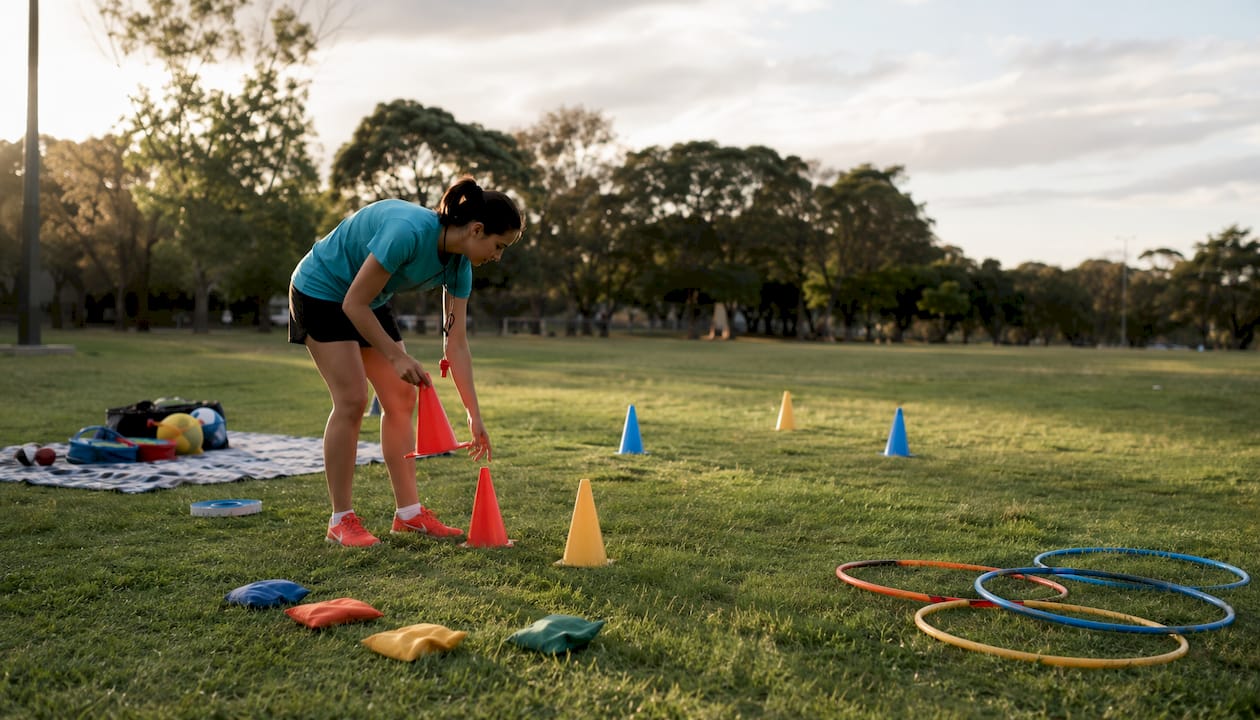
Most of this kit already lives in your PE store. Cones, hoops, beanbags, and tape cover the majority of stations; portable outdoor equipment such as foam javelins and parachutes can fill the gaps inexpensively.
Why Laserclay works so well on a school sports day
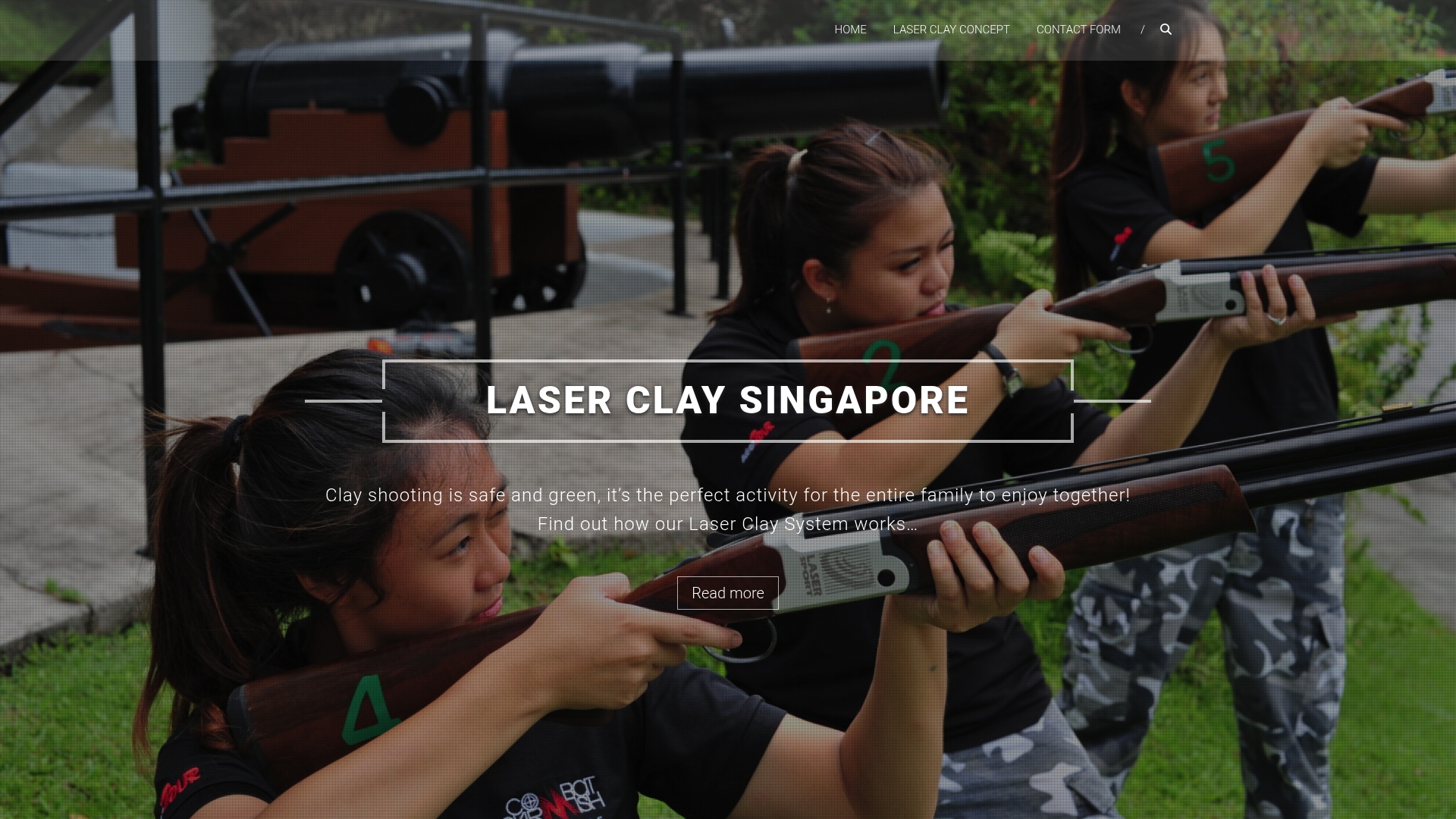
Laserclay brings three things traditional sports day stations rarely combine: no safety risk from live ammunition, a precision-based format that any pupil can succeed at, and reusable targets that leave no lead contamination on school grounds.
Pedagogical experts consistently recommend removing competitive pressure to shift the focus from winning to improving physical ability, and precision activities do exactly that. A pupil who finishes last in every race can outscore a county-level sprinter on a laser-clay station because the skill being tested is hand-eye coordination, not speed or endurance. School Games events across the UK have already added laser-based shooting and archery to their programmes specifically to broaden participation and give children a chance to try genuinely new skills.
For SEND pupils and those with limited mobility, the seated or shortened-distance format means inclusion is built in rather than bolted on. Rebranding the day as a Festival of Fun or hybrid games event lets schools celebrate a broader range of talents without abandoning the community spirit of a traditional sports day.
How does a Laserclay station actually run?
A Laserclay station needs a clear run area of roughly 10–15 metres, a safety buffer behind the target zone, and a spectator area to the side. It works on grass or hard standing and can move indoors to a sports hall or covered area when the weather turns.
| Format | Group size | Session length | Estimated throughput |
|---|---|---|---|
| Standard rotation | 8–12 pupils | 15–20 minutes | 8–12 pupils per slot |
| Taster session | 4–6 pupils | 10 minutes | 8–12 pupils per slot |
| Full-class block | Up to 30 pupils | 20–30 minutes | Whole class in one block |
Key logistics to confirm before the day:
- One Laserclay facilitator per active shooting lane; DBS-checked and provider-supplied.
- Sound-simulated, deactivated shotguns mean no noise complaints and no firearms licensing.
- Equipment set-up takes roughly 20–30 minutes; pack-down is similar.
- For wet weather, a sports hall with a 10-metre clear run works perfectly. Confirm ceiling height (minimum 3 metres) when booking.
- Scoring can run as a real-time electronic leaderboard or a participation-only format with no visible ranking.
Health, safety and safeguarding checklist for UK schools
Before any external provider operates on site with pupils, schools should verify the following:
- Provider risk assessment (RA) — request a copy specific to the activity and your site before the event date.
- Public liability insurance — minimum £5 million cover is standard; ask for the certificate, not just a verbal confirmation.
- DBS-checked facilitators — all on-site staff working with children must hold a current enhanced DBS certificate.
- First-aid cover — confirm whether the provider brings a qualified first-aider or whether your school’s own cover is expected to extend to their station.
- Parental consent — include the Laserclay station in your standard sports-day consent letter; note the activity type and that no live ammunition is involved.
- Site-specific RA — your own school RA should be updated to include the new station, its footprint, and the supervision ratio.
A provider-supplied RA, proof of public liability insurance, and DBS checks for on-site facilitators are the standard requirements UK schools apply before any external provider can operate with children.
Pro Tip: Store signed parental consent forms alongside the event RA in a single folder (physical or shared drive) so they are retrievable immediately if a query arises on the day. Cross-reference your school’s safeguarding policy to confirm the consent wording meets your headteacher’s requirements before sending letters home.
How to adapt Laserclay and other stations for mixed-ability pupils
Simple adaptations increase participation and reduce anxiety, particularly for pupils who have previously disengaged from sports day.
- Shorter distances — move the shooting position 2–3 metres closer for younger or less confident pupils without changing the target or scoring.
- Seated options — a chair or wheelchair position at the station works with the standard equipment; no modification to the laser system is needed.
- Visual and tactile cues — coloured floor markers and verbal countdowns help pupils with sensory processing needs prepare for each turn.
- Buddy systems — pair a less confident pupil with a supportive peer for the walk to and from the station.
- Participation-only scoring — replace the leaderboard with a skills-station stamp card: every pupil earns a stamp for completing each station, regardless of score.
Cooperative non-competitive formats where teams rotate and support each other have successfully engaged wide age ranges. Starting with one or two non-competitive stations and expanding them in subsequent years is the most effective way to manage the transition without resistance from staff or pupils who value the competitive element.
What does a Laserclay booking actually cost?
Cost drivers vary, but the main factors are:
- Facilitator fees — typically charged per session or per day; confirm whether travel is included or billed separately.
- Equipment hire — the laser system, targets, and shotguns are usually bundled; ask whether the quote covers full set-up and pack-down.
- Duration and group size — longer events and larger cohorts increase cost; a half-day hire for a primary school is usually more cost-effective than an hourly rate.
- Travel — providers outside your area may charge a mileage or transport fee.
Questions to ask before you confirm a booking:
- Can you supply a copy of your risk assessment and public liability insurance certificate?
- Are all facilitators DBS-checked, and can you confirm their certificate dates?
- What is your cleaning and hygiene protocol for shared equipment between groups?
- What are your cancellation terms if the event is postponed due to weather?
- How long do you need for set-up and pack-down, and is that time included in the hire period?
- Do your targets meet eco-friendly reusable standards, and can you confirm no lead ammunition is used?
- Can you invoice against a school purchase order?
For a school-friendly package, ask whether the provider offers a flat-rate half-day price that covers a set number of rotations. Most providers will negotiate on travel costs if you can confirm a firm date and pupil numbers early.
Sample sports-day rotation you can copy today
Half-day format (4 hours, 6 stations)
| Time slot | Station | Group size | Duration | Notes |
|---|---|---|---|---|
| — | Parachute games | 20 | 20 min | Warm-up; all abilities |
| — | Target-throw (beanbags) | 10–12 | 20 min | Rotate two groups |
| — | Laserclay | 8–12 | 20 min | Facilitator-led |
| — | Obstacle course relay | 10–12 | 20 min | Mixed-ability pairs |
| — | Team treasure hunt | 20 | 20 min | Whole-group cooperative |
| — | Welly wanging | 10–15 | 20 min | Standing event |
| — | Water break + free play | All | 30 min | Recovery buffer |
Rotation notes:
- Keep the Laserclay station to 8–12 pupils per slot to maintain the supervision ratio and avoid queuing.
- Stagger changeovers by 2–3 minutes to prevent bottlenecks at the equipment handover points.
- Assign one member of staff per station plus a roving supervisor for the full site.
Wet-weather contingency: move Laserclay and the target-throw station into the sports hall. Parachute games and the treasure hunt can run in covered walkways or the main hall with minor layout adjustments. The obstacle course can be simplified to a balance-beam and cone-weave circuit indoors.
Key takeaways
Laserclay is the safest, most inclusive station to add to a UK school sports day because it removes live ammunition, uses reusable targets, and rewards precision over athleticism.
| Point | Details |
|---|---|
| Lead with non-competitive formats | Station rotations with cooperative tasks increase participation across all ability levels. |
| Verify provider credentials | Request a risk assessment, public liability insurance certificate, and DBS confirmation before booking. |
| Adapt every station for inclusion | Shorter distances, seated options, and participation-only scoring remove barriers for SEND pupils. |
| Budget for the full day | Factor in facilitator fees, travel, set-up time, and a wet-weather contingency when costing a new station. |
| Laserclay as the recommended station | Eco-friendly, facilitator-led, and precision-based: Laserclay fits a modern school sports day without the safety or environmental concerns of traditional shooting activities. |
Why precision activities change the sports-day conversation
The conventional wisdom about sports days is that you just need more variety. Add a sack race, throw in a novelty event, and the inclusion problem is solved. It is not. The pupils who disengage from sports day are not bored by the format; they are disheartened by a programme that consistently rewards the same physical attributes they do not have.
Precision-based activities like Laserclay shift the currency of success. A pupil who has never won a race can be genuinely competitive at a station that rewards stillness, focus, and hand-eye coordination. That is not a consolation prize. It is a different skill set being recognised, often for the first time in a PE context. Schools that have introduced laser games in their programmes report that the pupils who engage most enthusiastically are frequently those who had previously opted out of physical events entirely.
The eco-friendly angle matters too, particularly when you are seeking sign-off from governors or parents. No lead contamination, reusable targets, and a facilitator-led safety model are straightforward arguments to make in a letter home or a governors’ meeting.
Laserclay for your next school sports day
Laserclay gives school event organisers a facilitator-led, eco-friendly station with no live ammunition, reusable targets, and a format that works for every pupil regardless of athletic ability. It arrives with its own risk assessment, DBS-checked staff, and full equipment, so your safeguarding paperwork is straightforward.
Before you get in touch, have the following ready: your preferred event date, expected pupil numbers, surface type (grass or hard standing), nearest parking or access point, and any SEND or dietary notes for the group. That information lets Laserclay turn around a tailored quote quickly.
Visit the Laserclay event rentals page to see package options, or go straight to the how-to-play guide to understand exactly what pupils experience on the day.
Useful UK sources and further reading
- Youth Sport Trust — guidance on inclusive event planning and adapted physical education; useful when designing mixed-ability stations and writing your inclusion policy.
- afPE (Association for Physical Education) — resources on adapted PE, risk management, and safeguarding for external providers working in schools.
- School Games Organiser network — county-level event reports showing how schools have added non-traditional disciplines including laser-based activities to broaden participation.
- PE Scholar — evidence-based insight on rethinking sports-day formats and rebranding events as festivals or hybrid games.
- Waldorf PE carnivals guidance — pedagogical rationale for removing competitive pressure and designing cooperative events.
When vetting any external provider, ask to see their RA and insurance pages directly rather than relying on a summary. Cross-reference their DBS process against your school’s own safeguarding policy before confirming a booking.