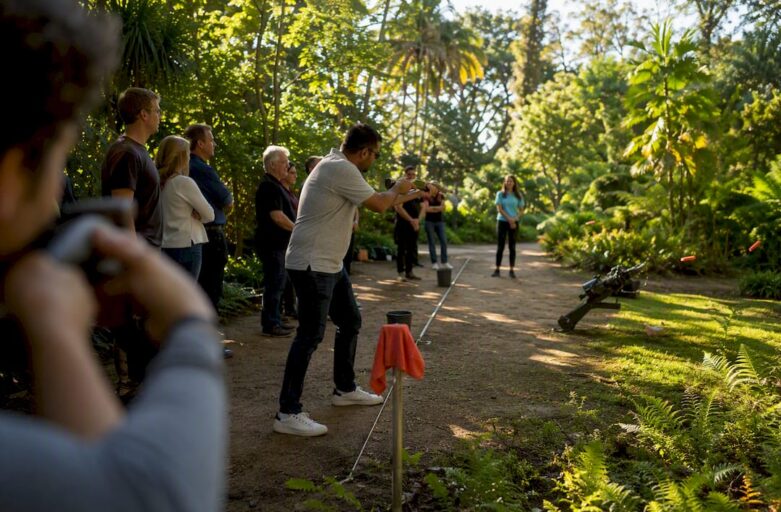
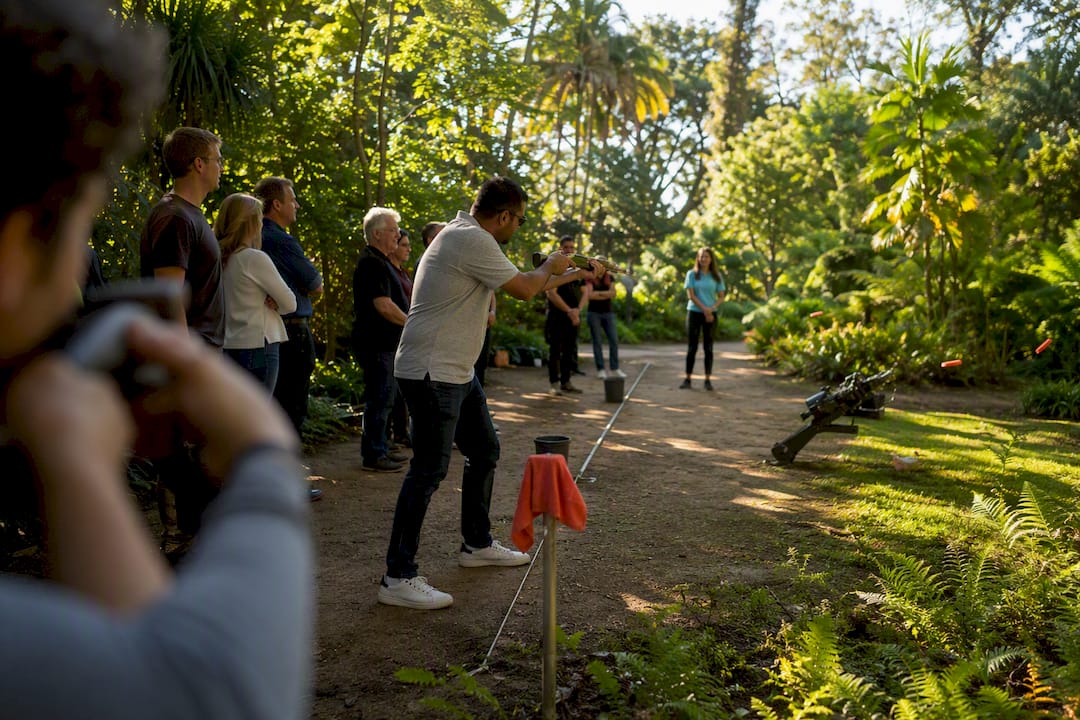
Outdoor laser clay swaps live shotgun ammunition for infrared beams and reflective clays, giving groups the thrill of clay pigeon shooting with none of the ballistic risk. It suits corporate team days, birthday parties and school events precisely because beginners can shoot safely within minutes under a facilitator’s supervision. If you’re planning an event, the next step is simple: check your site against the space requirements below, then get in touch to lock in a date.
TL;DR:
- Outdoor laser clay requires a space of at least 30m by 40m to accommodate traps, shooting lines, and safety buffers effectively.
- The activity is suitable for children from age 8 with supervised play and adjustable sound levels to suit noise-sensitive participants.
- Weather concerns such as rain or strong wind should be addressed with backup indoor options or flexible rescheduling policies.
- Packages usually include facilitators, equipment, setup, and teardown, with costs scaling based on group size, duration, and the number of stands.
- Multi-player stands typically allow five shooters at a time, making it feasible to manage large groups without long queues.
Table of Contents
- What is outdoor laser clay and how does it work?
- Why outdoor laser clay works for team building and events
- What does an outdoor laser clay package typically cost?
- Outdoor site and equipment requirements
- How does an outdoor laser clay session actually run?
- Is outdoor laser clay safe for all ages?
- What happens if the weather turns?
- How is the equipment kept clean and reliable between groups?
- Author perspective: what actually matters once you’ve booked
- Ready to book outdoor laser clay for your event?
- Sources
- FAQ
What is outdoor laser clay and how does it work?
Outdoor laser clay replicates the mechanics of traditional shooting without powder, pellets or recoil. A deactivated or modified shotgun fires an infrared beam instead of shot, and that beam registers a hit on a reflective or reusable clay launched from an automatic trap. There’s no projectile in flight and no lead falling into the grass afterwards, which is the main reason it works in spaces where live shooting simply couldn’t happen.
The system behind this is straightforward once you see it in action: a laser clay shooting system pairs the deactivated guns with electronic sensors on each clay, feeding results straight to a scoreboard.
- Infrared beams from realistic, sound-simulated shotguns replace live ammunition entirely.
- Automatic traps launch reflective or reusable clays on repeatable trajectories.
- Electronic sensors register hits instantly and post scores to a live display.
- No projectiles travel downrange, which removes the ricochet and stray-shot risks tied to live clay shooting.
The result feels like the real sport, minus the safety perimeter and cleanup that live cartridges demand. Anyone who understands why laser beats real clay shooting for kids will recognise the same logic applies to nervous adult beginners at a corporate day out.
Why outdoor laser clay works for team building and events
Live clay shooting has a high skill barrier and a real injury risk that keeps a chunk of any group on the sidelines. Laser clay removes both problems. Nobody needs prior firearms experience, there’s no recoil to manage, and a facilitator can get a total novice hitting targets inside their first few shots.
- Beginners and experienced shooters compete on equal footing, since the equipment does the heavy lifting.
- Reusable clays and beam-based “ammunition” mean no lead shot or spent cartridges left on site.
- Live electronic scoring turns a casual activity into a genuine competition with a leaderboard.
- Team formats and knockout brackets give HR teams and party hosts a built-in structure for bonding.
The scoring is what elevates this above a novelty demo. Providers who build in live leaderboards give organisers a measurable outcome to point to when justifying the activity budget, rather than a vague “everyone had fun.”
Pro Tip: If the goal is genuine mixing across departments or age groups, ask the facilitator to run mixed teams rather than letting friend groups self-select. It changes the energy of the whole event.
What does an outdoor laser clay package typically cost?
Pricing in this space is usually structured per person, often with a minimum group size or minimum spend to cover facilitator time and equipment transport. Packages tend to scale with duration and the number of shooting stands running simultaneously, since more stands mean shorter queues for larger groups.
- Confirm group size and duration first. Most providers price around a minimum headcount, and per-person rates drop as numbers grow.
- Ask what’s included. A standard package usually bundles facilitators, the shooting equipment, trap setup and teardown, digital scoring, and adjustable sound simulation.
- Check lead time. Popular dates, especially weekends and school holiday weeks, often need booking several weeks ahead.
- Ask about deposits. A deposit to secure the date is standard practice, with the balance due closer to the event.
- Clarify cancellation and rescheduling terms before signing, particularly for an outdoor date exposed to weather risk.
- Request references for similar events, such as a corporate day of comparable size or a school fair.
A short checklist when requesting quotes: how many shooters can play at once, what happens if it rains, whether facilitators are included in the quoted price, and how much notice you need to change the headcount. Booking platforms in this space often run on standard online reservation systems that show live availability, which is worth asking about if you need a firm date fast.
Outdoor site and equipment requirements
Space is the first thing to check before you commit to a venue. Providers commonly recommend a minimum clear footprint of around 30m x 40m, or an alternative layout such as 50m x 20m, to fit the traps, the shooting line and a safe buffer around both.
- A flat, unobstructed area matters more than the surface type, though grass is usually preferred for stability underfoot.
- Access for a vehicle or trolley to bring equipment close to the setup point saves significant setup time.
- Power access helps for scoreboards and sound systems, though many rigs run on portable power.
- A dedicated spectator zone, set back from the shooting line, keeps the safety perimeter clean.
Ask your provider to walk the site with you, or at least review photos, before the date is locked in. A tighter garden or courtyard can still work with a scaled-down layout, similar to the setups covered in guidance on running a smaller backyard laser shooting practice, but expect shorter clay trajectories and less spectacle than a full outdoor rig.
How does an outdoor laser clay session actually run?
- Facilitators typically arrive 30 to 60 minutes ahead of the group to set up traps, scoring and sound equipment.
- Everyone gets a safety briefing and a few practice shots before scoring starts.
- Scored rounds run in whatever format suits the group, whether that’s team relays, a knockout bracket, or head-to-head duels.
- A final leaderboard closes the session, usually with prizes for the top scorers.
Stands commonly run typically allowing five shooters at once, which keeps queues short even for a group of fifty or more. Organisers usually receive a running scoreboard feed and a final results sheet they can share after the event.
Is outdoor laser clay safe for all ages?
Because there’s no live ammunition, the risk profile is fundamentally different from real clay shooting. Most providers still set a minimum age, commonly a minimum age commonly around 8 years old and up, and require supervised play throughout.
- A mandatory safety briefing and trained facilitators supervise every stand, not just the first few shots.
- Sound simulation volume is usually adjustable, which matters for younger children or noise-sensitive participants.
- Shooters who can’t stand for long periods can often shoot from a seated position with minor adjustments to the rig.
- Confirm public liability insurance and who holds it before signing a contract for a school or corporate event.
Pro Tip: If you’re booking for a school event, ask specifically how the provider handles mixed-age groups on the same stand. Good facilitators separate younger children from teenagers by session rather than mixing them on one leaderboard.
Anyone weighing this against a real shooting range for a youth group should read the case for running training indoors safely as a comparison point on supervision standards.
What happens if the weather turns?
Outdoor electronics and rain don’t mix well, and heavy wind can throw off clay trajectories from the traps. Extreme heat is more of a comfort issue than a technical one, but it still affects how long a group wants to stay outside shooting.
- Rain risks the electronic scoring units and sound equipment, not just participant comfort.
- Strong wind changes clay flight paths enough to affect scoring fairness.
- Ask your provider about indoor backup space, covered staging options, or a no-cost reschedule policy before the date is confirmed.
- Bring a shelter or gazebo as a fallback for scoring equipment even on a forecast-clear day.
Providers who offer both outdoor and indoor configurations give you a genuine fallback rather than a cancelled event. Full detail on how conditions affect the rig is covered in how weather affects outdoor laser clay shooting.
How is the equipment kept clean and reliable between groups?
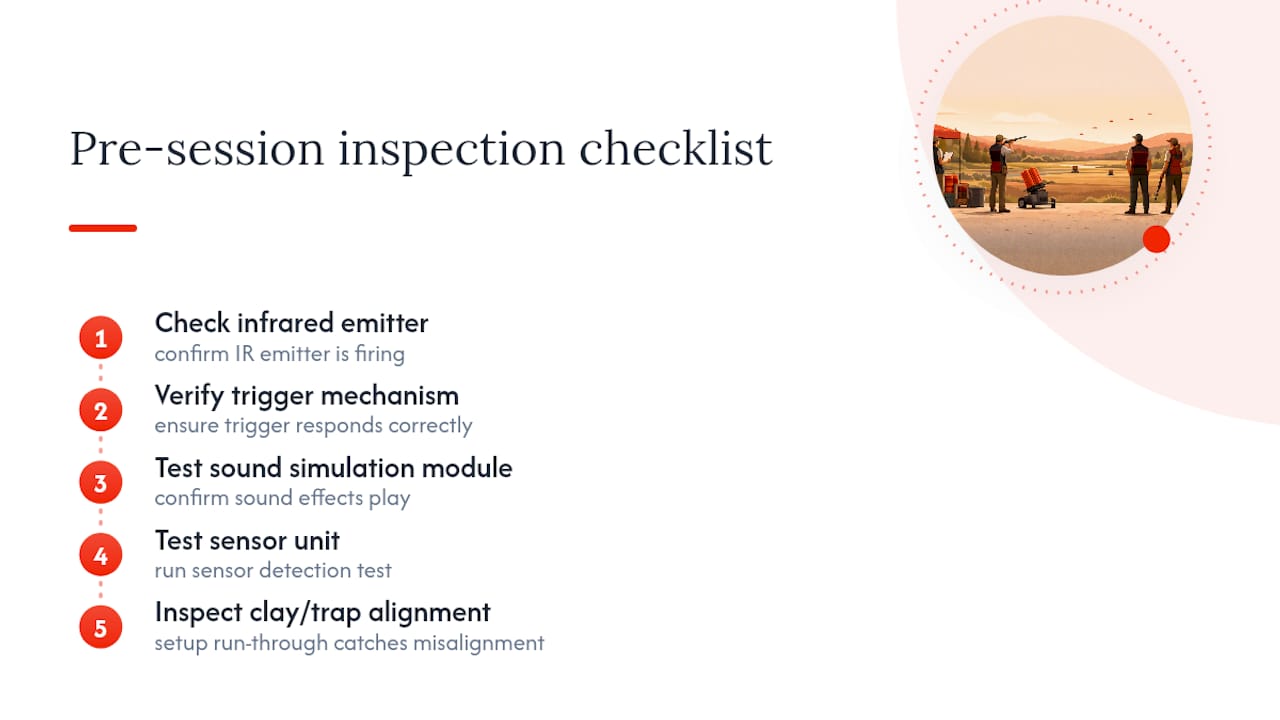
Reusable clays and shared shooting equipment need a maintenance routine that live ammunition never required, since a laser clay rig is designed to run session after session without replacement parts piling up in a skip. Facilitators typically inspect each gun and sensor unit before the first group arrives, checking that the infrared emitter, the trigger mechanism and the sound simulation module are all firing correctly. A misaligned sensor on a clay or trap is usually caught during the setup run-through, well before participants pick up a shotgun.
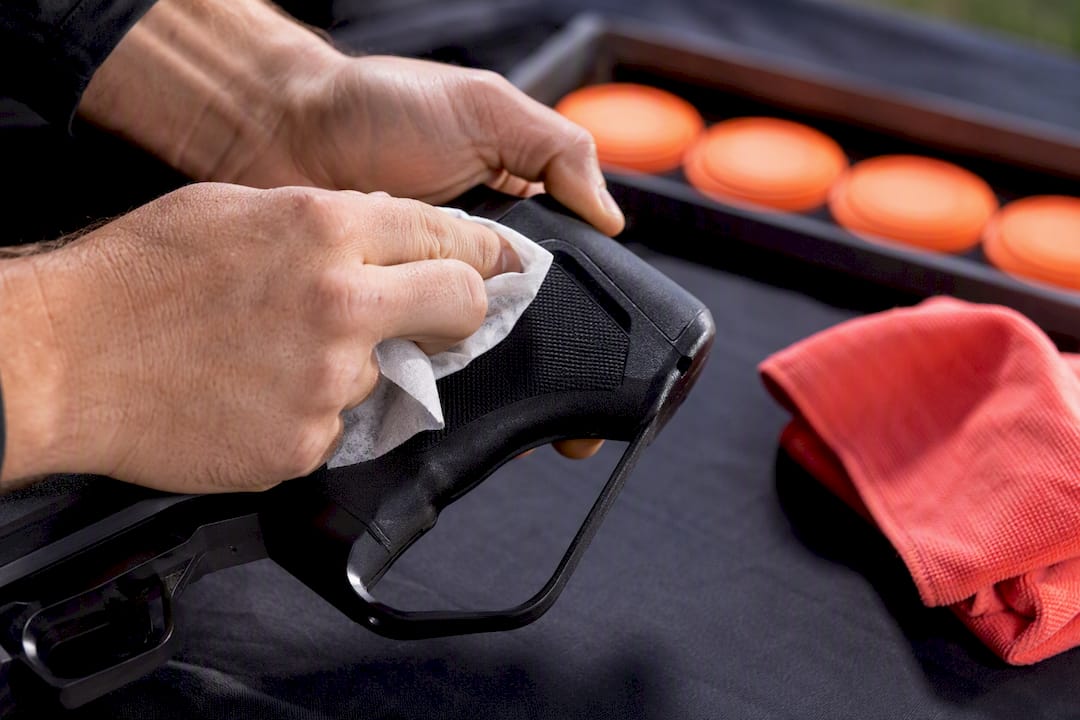
Hygiene matters more than most organisers expect, particularly for back-to-back bookings at school camps or multi-session corporate days. Shared equipment such as gun grips and trigger housings gets wiped down between rotations, and providers running several groups in one day usually build a short reset window into the schedule specifically for this. Reusable clays get inspected for cracks or sensor damage rather than simply reused indefinitely, since a damaged clay throws off scoring accuracy for everyone using that trap.
The traps themselves need periodic checks too. A launcher that’s misfiring or throwing clays on an inconsistent arc gets pulled and swapped rather than left running, because a bad trajectory undermines the fairness of the whole leaderboard. Ask any provider what their between-session routine actually looks like. A facilitator who can answer that question in specific terms, rather than a vague “we clean everything,” is usually the one running a tighter operation on the day.
Author perspective: what actually matters once you’ve booked
Most of what gets written about laser clay focuses on the tech. What actually separates a good outdoor event from a mediocre one is logistics you’d never think to ask about: how early the crew arrives, whether they’ve walked your site beforehand, and whether the group gets split into sensible teams instead of dumped onto stands at random.
Groups of 15 to 30 tend to get the most out of a single-session format, since everyone rotates through without long waits. Larger groups need multiple stands running at once, which changes the space and staffing conversation entirely. If your venue has tight vehicle access, flag it early. Installers need a straightforward path to bring traps and scoring gear close to the shooting line, and a long carry across a car park adds real time to setup.
The environmental angle is genuine, not just marketing colour. Reusable clays and beam-based shooting mean nothing gets left in the ground, which matters if your venue has any environmental restrictions on lead shot.
— Joshua
Ready to book outdoor laser clay for your event?
The provider supplies the outdoor system, the facilitators and the full event package, so you’re not stitching together equipment hire and staffing separately. That’s the real difference versus building an activity yourself: no chasing a range for a one-off booking, no sourcing your own safety-trained staff, just one package covering setup, scoring and teardown.
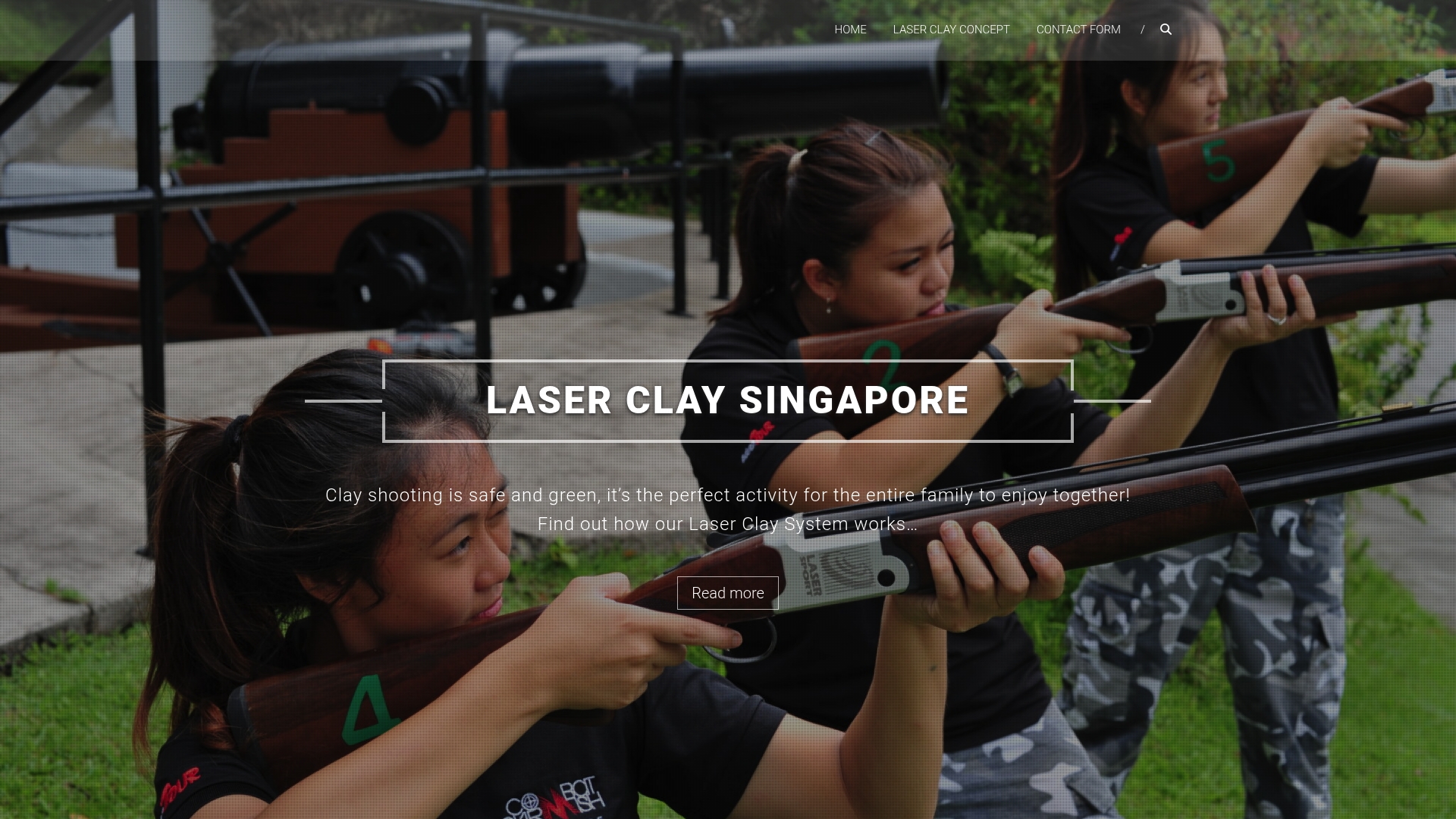
If you’re planning a corporate day, a dedicated team building package covers the pricing shapes and minimums most bookers ask about first. For birthdays, school camps or carnivals, the how to play laser clay page walks through formats and what to expect on the day. Get in touch early, particularly for weekend dates, since lead time and deposit requirements mean the best slots go first.
Sources
- Laser Clay Shooting – Outdoor – Matthews Leisure Gloucester
- Laser Clay Pigeon Shooting Hire: Fully Mobile Outdoor & Indoor Systems
FAQ
What is outdoor laser clay shooting?
Outdoor laser clay shooting uses infrared beams fired from deactivated shotguns to hit reflective or reusable clays launched from automatic traps, with electronic scoring replacing live ammunition entirely.
How much outdoor space do I need?
Providers commonly recommend a minimum footprint of around a minimum footprint of around 30m x 40m, or a comparable alternative layout such as 50m x 20m, to fit traps, the shooting line and safety buffers.
What age can children start playing?
Most providers set a minimum age around 8, with supervised, facilitator-led play required throughout regardless of age.
What happens if it rains on the day?
Ask your provider about indoor backup space, covered staging, or a reschedule policy before booking, since rain and wind both affect the electronics and clay trajectories.
How many people can shoot at once?
Multi-player stands typically allow typically allowing five shooters at once, keeping queue times manageable even for larger corporate or school groups.
How far ahead should I book?
Booking several weeks ahead is advisable for weekend dates or peak school holiday periods, with a deposit typically required to secure the slot.