

For most UK corporate events, the answer to scaling laser clay comes down to three bookable configurations: a single 5-gun system for smaller groups, a linked 10-gun setup (two systems) for medium corporate days, and a 15-gun layout (three systems) for high-capacity events and festival-scale fun days. The single most important organising principle is how well you manage participant flow through the available guns, rather than simply how many guns you have on site.
Before you contact any supplier, have these three things ready to brief them on:
- Simultaneous shooters needed — this determines how many systems to book (5, 10, or 15 guns).
- Operator provision — confirm whether the supplier includes an on-site instructor per system, or whether you need to specify this in the contract.
- Power source — clarify whether systems run on rechargeable internal batteries (preferred for outdoor sites) or require a mains connection.
| Configuration | Guns | Simultaneous shooters | Best suited to |
|---|---|---|---|
| Single system | 5 | 5 | Small team-building, up to ~30 guests |
| 2× linked systems | 10 | 10 | Medium corporate days, 30–80 guests |
| 3× linked systems | 15 | 15 | Large fun days, festivals, 80+ guests |
Table of Contents
- How does laser clay scale for large events?
- What specifications and capacity questions should you ask suppliers?
- What site layout, space, and power do you need for a large setup?
- What staffing and participant-flow management does a large event need?
- What session formats work best, and how do you calculate throughput?
- Are laser clay events safe, accessible, and compliant with UK requirements?
- What are the on-the-day logistics, and what common pitfalls should you avoid?
- What do UK providers do well, and what does the evidence suggest works?
- Key takeaways
- The detail most planners miss
- Laserclay: scalable laser clay hire for UK corporate events
- Useful sources
How does laser clay scale for large events?
The modular structure of laser clay is what makes it genuinely scalable. A single standard system accommodates five participants shooting simultaneously, and providers link systems to create 10-gun and 15-gun layouts. Each additional system adds five simultaneous shooters and one more trap station, so the maths is straightforward.
| Configuration | Guns | Simultaneous shooters | Estimated guests per hour (10-min sessions) | Typical use case |
|---|---|---|---|---|
| 1 system | 5 | 5 | about 25 to 30 guests | Small team-building, away days |
| 2 systems | 10 | 10 | about 60 guests | Medium corporate events |
| 3 systems | 15 | 15 | about 90 guests | Large fun days, festivals |
The guests-per-hour estimates above assume 10-minute shooting sessions with a brief changeover. Extend sessions beyond 10 minutes and throughput drops; shorten sessions for quick-play formats and it rises. The practical ceiling for a single outdoor site is usually three linked systems, partly because of footprint and partly because managing more than 15 simultaneous shooters requires proportionally more marshalling staff to stay safe.
Adding a second or third system is not simply “more of the same.” You need to confirm that the systems are engineered to synchronise scoreboards and traps, so that adjacent stations do not create scoring conflicts. Ask your supplier this question explicitly before signing a contract.
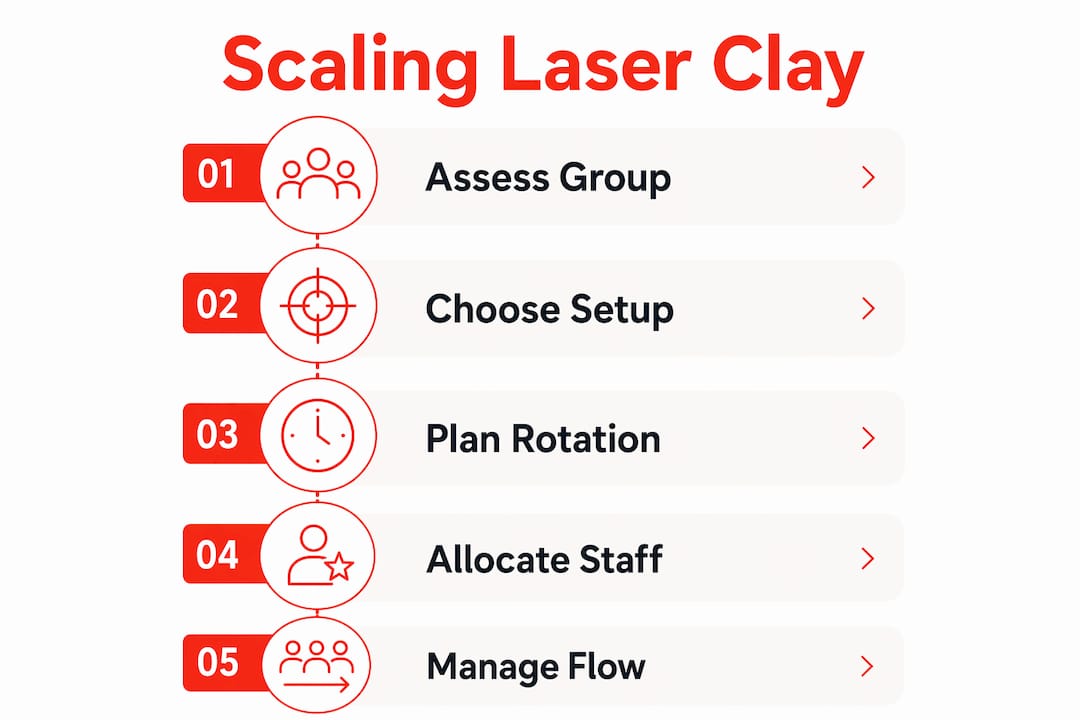
For groups larger than about 20 people, rotation models — teams cycling between laser clay and other activities — are often more effective than simply stacking more guns. They keep queues short, maintain energy, and let a single laser-clay setup handle a much larger overall headcount across the day.
What specifications and capacity questions should you ask suppliers?
Knowing the right questions separates a smooth event from an on-the-day scramble. The core specs to confirm before booking are:
- Guns per system — standard is 5 per system; confirm this is not reduced for a hire package.
- Simultaneous shooters — should match guns per system (5, 10, or 15 depending on configuration).
- Scoreboard capacity and game modes — providers commonly include an electronic scoreboard with multiple game formats (speed shoot, accuracy, combined scores); confirm these are included and are not add-ons.
- Trap model and clay supply — ask how many reusable clays are supplied per system and whether spares are included.
- Battery life and charging time — critical for all-day outdoor events.
- Weatherproofing rating — confirm the system is rated for outdoor UK conditions.
- Spare parts on site — ask whether the operator carries replacement components.
- Travel and setup time — factor this into your event schedule.
Statistic callout: Laser clay systems typically accept participants from around eight years old, require no hearing protection, and produce no recoil, making them one of the most accessible shooting activities available for mixed-ability corporate groups.
When confirming battery specs, ask for both runtime per charge and the charging time required between sessions. A system that runs for four hours but takes three hours to recharge is a problem on a full-day event. Suppliers that provide this detail upfront, alongside a written risk assessment and operator ratios, make the procurement process significantly faster.
What site layout, space, and power do you need for a large setup?
Site planning is where most large-event laser clay setups either succeed or fall apart. The key requirements:
- Clear line-of-fire — each trap needs an unobstructed arc in front of it; confirm minimum distances with your supplier, as these vary by trap model.
- Queuing area — allow at least 3–4 metres behind the shooting line per station for a safe, organised queue.
- Trap placement — traps are typically positioned 10–15 metres in front of the shooting line; confirm exact dimensions when you receive the system spec sheet.
- Spectator zone — keep spectators to the sides and rear, clearly separated from the shooting arc with bunting or barriers.
- Shelter — for outdoor UK events, a gazebo or marquee over the shooting line is strongly advisable; many providers include shelter in their hire package.
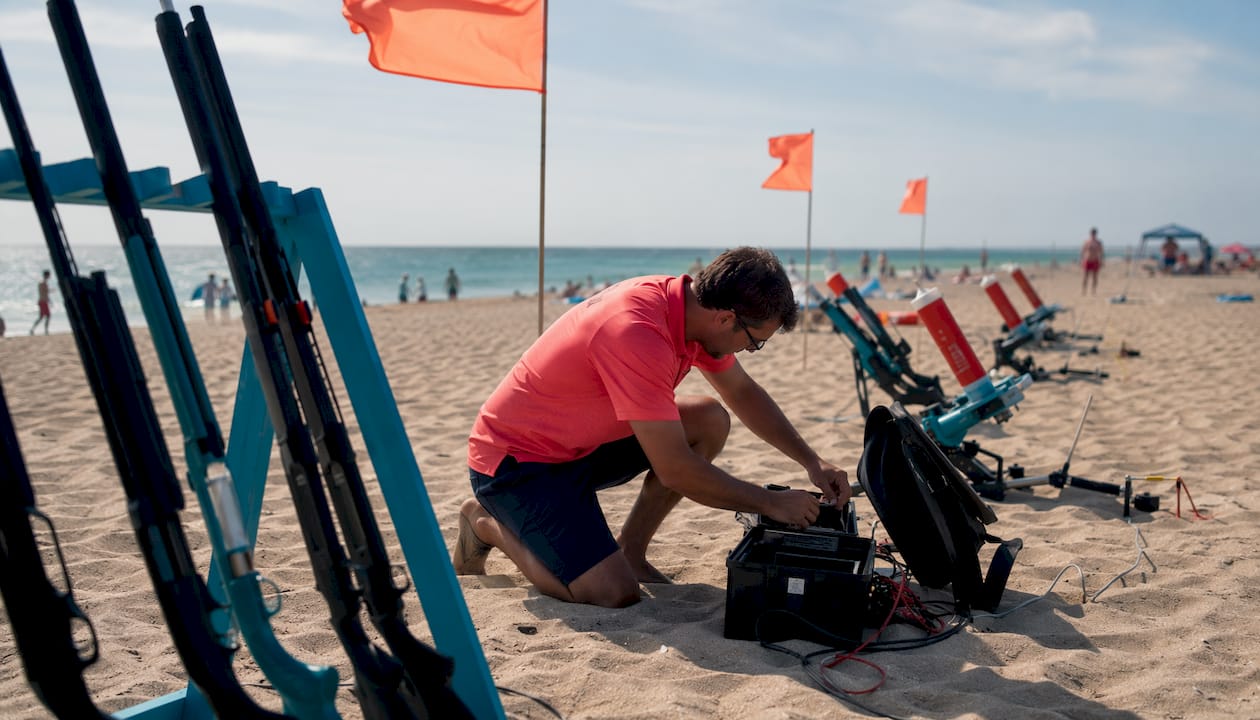
On power: many UK providers operate fully self-sufficient systems using rechargeable internal batteries for both the scoreboard and the trap launcher. This removes the need for long cable runs across a field, reduces trip hazards, and simplifies H&S sign-offs considerably. If a supplier requires mains power, ask for the load requirement and confirm your venue can supply it; also request PAT test certificates for any mains-connected equipment.
For indoor events, confirm ceiling height (traps launch clays on an upward arc) and floor surface (cables and equipment bases need to be secured on hard floors). Outdoor events on grass are generally straightforward, but soft ground after rain can affect trap stability — ask whether the supplier uses ground anchors or weighted bases.
Pro Tip: When linking two or three systems, position them side by side with a shared spectator area behind rather than spreading them across a wide arc. This lets a single marshal oversee multiple stations, reduces the risk of cross-fire confusion, and keeps the crowd energy focused in one place.
What staffing and participant-flow management does a large event need?
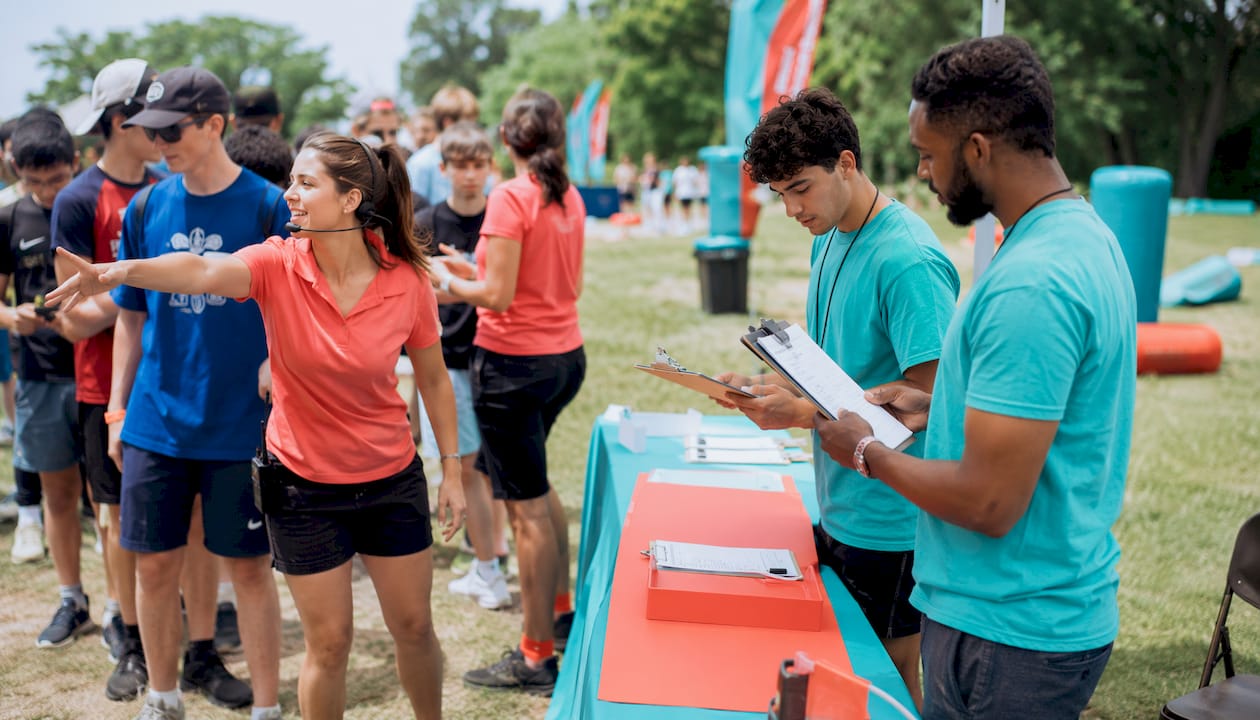
Staffing is the variable most planners underestimate. The right roles for a scaled laser clay event are:
- Lead instructor — runs the safety brief, demonstrates technique, and manages the competitive rounds.
- Assistant marshal(s) — one per additional system beyond the first; manages queuing, enforces range discipline, and assists with changeovers.
- Scoring attendant — monitors the leaderboard, records scores, and announces results; can be combined with the lead instructor role for smaller setups.
- Logistics runner — for events with two or three systems, reserve at least one runner per two to three systems to transport spares, manage queues across stations, and handle minor faults during the event window.
| Configuration | Minimum staff | Recommended staff |
|---|---|---|
| 1 system (5 guns) | 1 instructor | 1 instructor + 1 marshal |
| 2 systems (10 guns) | 2 instructors | 2 instructors + 1 marshal + 1 runner |
| 3 systems (15 guns) | 3 instructors | 3 instructors + 2 marshals + 1 runner |
Confirm with your supplier whether instructors are included in the hire fee or quoted separately. Most UK providers include at least one operator per system, but this is worth specifying in writing.
For participant flow, the most effective approach at scale is structured rotation: divide your group into teams, assign each team a start station, and rotate on a fixed schedule. Staggered starts — releasing teams at five-minute intervals rather than all at once — prevent the bottleneck that occurs when 80 guests arrive at the shooting line simultaneously. A simple wristband or coloured lanyard system lets marshals direct guests to the correct station without confusion.
What session formats work best, and how do you calculate throughput?
Three formats cover the majority of corporate and large-group events:
- Quick play (8–10 minutes per group): one practice round of five clays, followed by one competitive round of five clays. Fastest throughput; suits fun days and festivals where engagement time per guest is less important than volume.
- Practice and skill shoot (12–15 minutes per group): two practice rounds, one competitive round, brief coaching from the instructor. Better engagement; suits corporate team-building where skill development matters.
- Tournament ladder (20–25 minutes per group): qualifying rounds, semi-finals, and a final for the top scorers. Lowest throughput but highest engagement; suits smaller groups or as a headline activity at a company away day.
Sample run sheet for a 10-gun, 80-guest event (quick-play format):
- 08:30 — Supplier arrives; setup begins (allow 45–60 minutes for a two-system setup).
- 09:30 — Site check and test run by lead instructor.
- 10:00 — Guests arrive; group safety brief (10 minutes, all guests together).
- 10:10 — First rotation begins; 10 guests shooting simultaneously across two stations.
- 10:20 — Second rotation; first group exits, second group enters.
- Continue rotating every 10 minutes until all 80 guests have shot.
- 13:20 — Final rotation complete; scores tallied, prizes announced (15 minutes).
- 13:35 — Supplier breakdown begins.
Throughput calculation: a 10-gun setup running 10-minute quick-play sessions handles 10 guests every 10 minutes, or 60 guests per hour. Eighty guests therefore need approximately 80 minutes of shooting time plus transition time, which is why the run sheet above allows around three hours from first rotation to prize announcement.
For a 15-gun setup on the same format, throughput rises to 90 guests per hour, meaning 80 guests can be processed in under an hour of actual shooting time.
Are laser clay events safe, accessible, and compliant with UK requirements?
Laser clay is one of the most straightforward activities to clear from a safety and compliance perspective, but planners still need to confirm the right documentation.
Core safety briefing points to confirm with your supplier:
- No recoil on any of the modified shotguns; participants of all physical abilities can handle the guns comfortably.
- No hearing protection required — the bang is computer-generated audio, not a live cartridge.
- Instructor-led at all times; no participant handles a gun without a briefing.
- Clear range procedures: guns down between rounds, no pointing at people, trigger discipline enforced by the marshal.
Accessibility: laser clay systems are typically suitable from around age 8 upwards, require no prior shooting experience, and produce no recoil, making them a practical choice for mixed-ability groups. For guests with mobility considerations, confirm with your supplier whether the shooting position can be adapted (seated shooting is possible on most systems).
UK compliance checklist — request these documents from your supplier in writing:
- Public liability insurance certificate (minimum £5 million cover is standard for UK events).
- Written risk assessment specific to the activity and your site.
- PAT test certificates for any mains-powered equipment.
- Evidence of operator training or qualification for the lead instructor.
Because electronic clays are reusable and non-breaking, there is no lead shot on site, no broken clay debris to clear, and no environmental permit complications. This is a material advantage over traditional clay pigeon shooting at licensed venues, where lead contamination and site cleanup add both cost and regulatory complexity.
Statistic callout: With no recoil, no hearing protection requirement, and suitability from approximately age 8, laser clay removes the three most common participation barriers that exclude guests from traditional shooting activities at corporate events.
What are the on-the-day logistics, and what common pitfalls should you avoid?
On-the-day checklist:
- Confirm supplier arrival time at least 45–60 minutes before guests arrive (two or three systems need more setup time than one).
- Walk the site with the lead instructor before guests arrive; agree the shooting arc, spectator zone, and queue layout.
- Run a test shoot on each system before the first guest group arrives.
- Confirm spare clays and any backup components are on site.
- Check power status on all batteries; if mains is used, confirm the supply is live and the cable run is secured.
- Brief your own event staff on the rotation schedule and queue management plan.
Common pitfalls and how to avoid them:
- Insufficient queue space — allow at least 3–4 metres behind the shooting line per station; cramped queues create safety risks and slow changeovers.
- Underestimating setup time — a three-system linked setup can take 60–90 minutes; build this into your event schedule, not your contingency.
- Unclear shelter arrangements — confirm in writing whether the supplier provides a gazebo; do not assume it is included.
- No contingency for wet ground — ask whether the supplier carries ground anchors or weighted bases for outdoor events on grass.
- Scoreboard sync not confirmed — when linking systems, verify in advance that scoreboards are synchronised; a scoring conflict mid-event is difficult to resolve on the day.
What suppliers normally provide vs what organisers typically supply:
| Supplied by provider | Supplied by organiser |
|---|---|
| Guns, traps, clays, scoreboard | Tables for registration and prizes |
| Operator/instructor per system | Barriers or crowd-control fencing |
| Gazebo/marquee (most packages) | Site access and ground preparation |
| Arena bunting and leaderboard | Power distribution (if mains required) |
| Clay collection at end of event | Catering and welfare facilities |
What do UK providers do well, and what does the evidence suggest works?
The most consistent observation across UK laser clay providers is that operator-led rotation and varied game formats keep high-volume groups engaged far better than simply adding more guns. A well-run 10-gun event with structured rounds and a competitive final will outperform a poorly managed 15-gun event where guests queue aimlessly and the format never changes.
Best practices observed across UK providers:
- Use a mix of practice and competitive rounds in every session; guests who only get one shot at a competitive round without a warm-up tend to disengage quickly.
- Rotate game formats across the day (speed shoot in the morning, accuracy challenge after lunch, combined-score final to close) to maintain novelty.
- Collect and reuse electronic clays at the end of each session; this is standard practice and eliminates the site-clearance burden that comes with traditional clay shooting.
- For festival-scale events, assign a dedicated logistics runner to each pair of systems; this single staffing decision prevents the minor faults and queue buildups that cause the most visible delays.
When contracting, confirm the following in writing before signing:
- System linking capability and scoreboard synchronisation method.
- Operator ratios (instructors per system).
- Battery runtime per charge and charging time between sessions.
- Transport time to your site and setup time on arrival.
The environmental case for laser clay is also worth including in your supplier brief if your organisation has sustainability commitments. Because clays are reused and no lead shot is discharged, the activity leaves no hazardous residue on site, which matters for venues with environmental management policies.
Key takeaways
Scaling laser clay for a large UK event works when you match the configuration to your group size, manage participant flow through structured rotations, and confirm the operational details with your supplier in writing before the event.
| Point | Details |
|---|---|
| Match configuration to group size | Book 5 guns for up to ~30 guests, 10 guns for 30–80, and 15 guns for 80+ guests. |
| Throughput beats gun count | Structured rotations and varied formats keep large groups moving; adding guns without a flow plan creates bottlenecks. |
| Confirm battery and staffing specs | Ask for runtime per charge, operator ratios, and setup time in writing before signing any contract. |
| Site and safety checklist | Secure a written risk assessment, public liability certificate, and confirm shelter and queue space before the event day. |
| Laserclay supports all three configurations | Laserclay’s linked-system hire covers 5, 10, and 15-gun layouts with operator provision and battery-powered independence. |
The detail most planners miss
The conversation around scaling laser clay almost always focuses on gun count. Book more guns, handle more guests. That logic is not wrong, but it is incomplete in a way that causes real problems on the day.
The events that run smoothly at scale are the ones where the organiser has thought as carefully about what happens between shooting rounds as during them. Where do guests go after they shoot? How long does a changeover actually take when you factor in a marshal explaining the scoring to a group who have never done this before? What happens to the queue when one system needs a two-minute reset?
A 15-gun setup with no rotation plan and a single instructor is harder to run than a 10-gun setup with a clear team-rotation schedule, two marshals, and a logistics runner. The gun count is the headline; the operational structure is what determines whether guests leave saying it was the best part of the day or the most frustrating queue they have ever stood in.
One tip that rarely appears in supplier brochures: brief your own event staff on the rotation schedule independently of the supplier’s team. When the lead instructor is mid-session and a queue question arises, your own staff should be able to direct guests without interrupting the shoot. That single preparation step prevents the most common bottleneck at large laser clay events.
Laserclay: scalable laser clay hire for UK corporate events
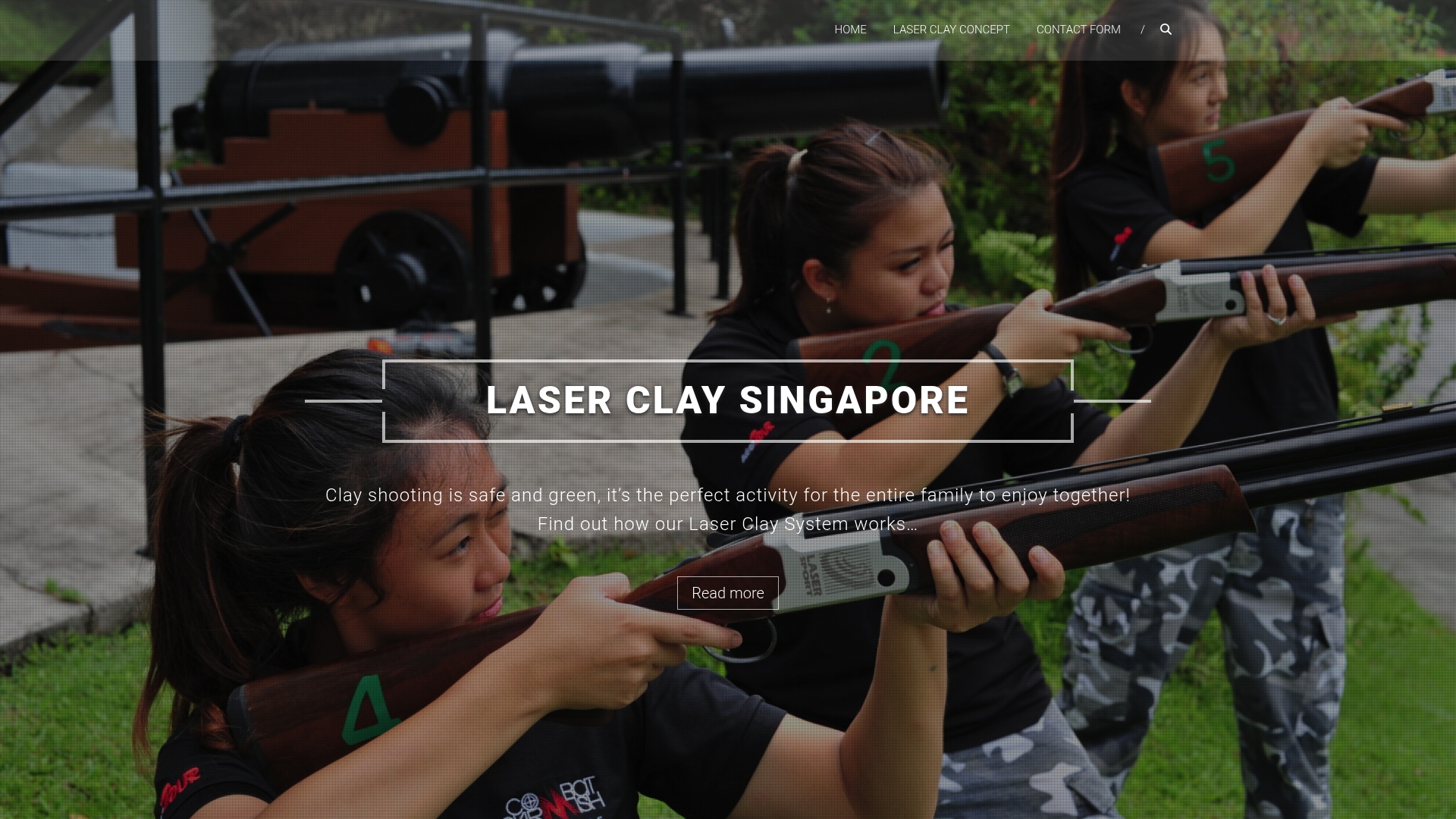
Laserclay offers scalable laser clay hire covering all three configurations covered in this guide: single 5-gun systems for smaller team-building sessions, linked 10-gun setups for medium corporate days, and 15-gun layouts for large fun days and festivals. Systems operate on rechargeable internal batteries, removing the need for mains cabling on outdoor sites. Operator provision is included, and the hire package covers guns, traps, reusable clays, scoreboard, and shelter.
Before you get in touch, prepare the following so Laserclay can turn around an accurate quote quickly:
- Total guest numbers and preferred session format (quick play, skill shoot, or tournament).
- Site map or venue details, including whether mains power is available.
- Preferred event date and start/finish times.
- Any accessibility requirements for your group.
To request a written quote with operator ratios, battery specs, and setup time included, visit Laserclay’s event rentals page or contact the team directly through the main site.
Useful sources
- Laser Clay Pigeon Shooting Hire and Rental — Altitude Events
- Laser clay shooting: how laser clays work — eTeambuilding
- Laser Clay Pigeon Shooting — Country Pursuits Event
- Laser Clay Pigeon Shooting Bristol — Max Events
- Laser clay shooting — Team Building Solutions
- Laser Clay team building explained for event planners — Laserclay
- How laser clay works without protective gear — Laserclay
- Why laser clay beats traditional sports days — Laserclay